Saturday, November 15, 2008

To the Ends of the Earth, Painting the Polar Landscape

Through March 1, 2009 at the Peabody Essex Museum, Salem Massachusetts


Aurora Borealis, 1865, Frederic Edwin Church, 56 x 83½ inches, oil on canvas

Capturing the high drama and stark beauty of historic polar expeditions, To the Ends of the Earth, Painting the Polar Landscape presents more than 50 works by prominent artist-explorers, from monumental romantic canvases to early modernist works in pastel — all rarely shown in a single exhibition. The exhibition offers a range of artistic responses to the unique landscapes of the Arctic and Antarctic — from the documentary to the sublime and existential, by renowned painters such as Frederic Edwin Church, Rockwell Kent and Lawren Harris.

(from the PEM website)


My Wife and I had the opportunity to go to the opening of the new exhibit at the Peabody Essex Museum, entitled “To the Ends of the Earth, Painting the Polar Landscape. I’ve posted on things related to exhibits at PEM before, and it is always a joy to go there. This new exhibit is no exception. I believe this is the largest exhibit ever to focus on Polar landscapes in art. The works, covering a century of exploration and styles in painting are really remarkable. For those (like me) who collect exhibition books or catalogues, the companion book is not only complete with all of the exhibited paintings, but is excellently done and inexpensive. (Though those, again like myself, who have an eye for a more permanent personal library, may wish for a hardback version).

The larger works follow the grand scenic painting styles of the nineteenth century. As such, if you are not familiar with early modernist painting, the transition to the twentieth century works can be anticlimactic. I would strongly suggest perusing the numerous books on the topic that the PEM has at the bookstore, and will probably have strewn around the seating areas throughout the exhibit (not there for the opening, but usually feature at past exhibits). Especially look to materials on Rockwell Kent. There was a special film shown on Kent at the opening, which is not listed on the website, but if it is available I highly recommend it. These materials will help the viewer understand the stylistic transitions, and to see the change in the early twentieth century where artists began to represent these regions in their inherent drama and beauty, and not as a backdrop for human adventure. With the big dramatic canvases, it would also be easy to overlook the various notebook sketches and smaller works. Take the time to dwell over these, as they are absolutely marvelous. I was especially drawn to the pastels of David Abbey Paige (1901-1979) in which he recorded many different atmospheric phenomena.

The PEM posts a PDF file for printout with information on the works, a list of references, and brief biographies of the artists and explorers, which would make a handy pre-visit read.

If you are in Eastern Massachusetts between now and 1 March 2009, To the Ends of the Earth, Painting the Polar Landscape would make for an excellent excursion.

For additional information, see the Press release.


(links good at time of post) UPDATE: bad link coding fixed (my bad)

Labels: , , , , ,

Friday, July 18, 2008


The Humanities

The Summer 2008 issue of The Wilson Quarterly has an excellent article by Wilfred M. McClay, "the Burden of the Humanities"

Mr. McClay brings some excellent and piercing perspective on the Humanities as they are currently being taught in our universities, and how they are perceived by the general public, and why.

Strange, that an era so pleased with its superficially freewheeling and antinomian qualities is actually so distrustful of the literary imagination, so intent upon making its productions conform to predetermined criteria. Meanwhile, the genuine, unfeigned love of literature is most faithfully represented not in the universities but among the intelligent readers and devoted secondary-school teachers scattered across the land.

Mr. McClay points out how identity politics has eviscerated the meaning of the Arts and Humanities and he goes on to show why we should care about this at all. He shows that the Humanities can and should remind us "that the ancients knew things about humankind that modernity has failed to repeal," a reminder more important today, as some aim to move us into a post-human world.

Go have a good read.


(image "Landscape" 1994, by Mark Tansey, used as the title illustration in the original article)

Labels: , , , ,

Thursday, May 29, 2008

Roman Funerary Art at the Museum of Fine Art, Boston

FUNERARY PORTRAIT RELIEFS

During the late Republican and Augustan periods (about 70 B.C.-A.D. 14), funerary reliefs with portraits of the deceased and members of their families were popular. Almost without exception the portraits are of freed slaves (liberti) and their offspring. The portraits are frequently accompanied by inscriptions that indicate the professions and family relationships of the people in the relief. Occasionally, a slave's former owner was also shown. The reliefs were inserted into the tombs that lined the roads leading out of Rome. This use of funerary portrait reliefs saw a resurgence in the second century A.D.

(from the display card for Funerary Relief of the Publius Gessius Family)

The MFA has many wonderful Roman antiquities. Here are some of the Funerary Portraits, Cinerary Urns, and Sarcophagi that they display.

long post, with complete transcribed display information, just keep scrolling


Funerary Relief of a Mother and Son
Roman, Imperial period, about A.D. 110-120
Marble

This panel came from a tomb that, as the inscription records, Petronia Hedone made for herself and her son as well as her fredd slaves and their descendants. The resemblance of Petronia's hair to that of Martiana (died A.D. 112), Emperor Trajan's sister, suggests the relief's date, though the use of drilled holes for the pupils of the eyes rarely occurs before the reign of Hadrian (A.D. 117-138).

Henry Lillie Pierce Fund, 1899 99.348

Inscription
Petronia Hedone fecit sibi/et L(ucio) Petronio Philemoni filio/et libertis libertabusquae/posterisquae eorum

Petronia Hedone made [this] for herself and for Lucius Petronius Philemon, her son, and for [her] freedmen and freedwomen and their descendants


Sarcophagus with Triumph of Dionysus
Marble (from the island of Proconnesus, Turkey)

Dionysus, also known as Bacchus, was the god of wine and drama. He is one of the most frequently depicted gods in ancient art and is often shown in the company of mythological beings like satyrs, silens, and maenads as well as such animals as lions, panthers, and snakes. The inclusion of an elephant-drawn chariot and a giraffe in the procession identify the scene as the god's triumphal return from spreading his cult to India. Dionysiac imagery frequently occurs in Roman funerary art, and may reflect the beliefs of the deceased.

William Francis Warden Fund, 1972 1972.650


Funerary Relief of the Publius Gessius Family
Roman, late Republican period, about 50-20 B.C.
Marble (probably from Carrara, Italy)

The Latin inscription at the base identifies the central figure as Publius Gessius, a Roman citizen in military costume. He is flanked by Fausta Gessia, a slave whom he had freed, and by their son, R. Gessius Primus, also a freed slave. The inscriptions on the sides indicate that Fausta built the tomb that held this relief with money provided in Primus's will, a common practice in antiquity.

Archibald Cary Coolidge Fund, 1937 37.100

Inscriptions
Lower Edge:
Gessia P(ubli) l(iberta) Fausta/P(ublius) Gessius P(ubli) f(ilius) (tribu) Rom(ilia)/P(ublius) Gessius P(ubli) l(ibertus) Primus

Gessia Fausta, freedwoman of Publius/Publius Gessius, son of Publius, of the Romilian tribe/Publius gessius Primus, freedman of Publius

Left:
ex testam[ento]/P(ubli) Gessi P(ubli) l(iberti)/Primi

From the testament of Publius Gessius Primus, freedman of Publius

Right:
Arbi(tratu)/Gessia[e P(ubli) l(ibertae)]/Fausta[e]

Under the direction of Gessia Fausta, freedwoman of Publius


Cinerary Urn with Offering Scene
Roman, Imperial period, about A.D. 150
Marble (from the island of Proconnesus, Turkey)

In this scene of piety, a man pours an offering of wine over an altar while a woman raises her hands in prayer. A flute player provides music, a frequent component of ancient sacrifices. The side panels show the eagle of Jupiter and the peacock of Juno, each holding a victory wreath. Cinerary urns and sacrophagi were usually produced in workshops near quarries and shipped to urban centers of sale. The faces of this couple were prepared for portraits that were never carved, perhaps due to a sudden death and the need to use the urn immediately.

Museum purchase with funds donated in memory of Emily Townsend Vermeule, 2002 2002.25
(from the display card)


Cinerary Urn of L. Cassius Colonus Colonianus
Roman, late imperial period, about A.D. 200
Marble (from the Greek island of Thasos)

This urn held the ashes of Lucius Cassius Colonus Colonianus, a member of the social class known as the equites (roughly "knights"). The urn is densely covered with figures representing the death of Pentheus, king of Thebes, a story known from Euripides's play 'The Bacchae'. Pentheus opposed the presence of Dionysus in his city and spied upon the women celebrating the god's rites. This scene shows the play's climax, when the women of Thebes, driven into the ecstatic state associated with the worship of Dionysus, tear Pentheus apart. Dionysus, standing on the left, witnesses this scene, accompanied by his thiasos (entourage) of satyrs, silens, and maenads.

Benjamin and Lucy Rowland Fund, 1972 1972.356

Inscription
D(is) M(anibus) L(uci) Cassi Coloni Coloniani eq(uitis) R(omani)/vixit ann(is) XXXV
To the spirits of the dead of Lucius Cassius Colonus Colonianus, a Roman eques; he lived thirty-five years.

Labels: , , , , , , , , ,

Thursday, May 22, 2008

Comparative Myths

Assistant Village Idiot has an excellent and pithy post on the different myths our society argues about, and their comparative impact.

A good quick morning read, go and enjoy.

Labels: , , ,

Friday, May 02, 2008

The Library of the Mind


The repository that is the human mind is an amazing thing.


”Invention, strictly speaking, is little more than a new combination of those images, that have been previously gathered and deposited in the memory: nothing can come of nothing: he who has laid up no materials can produce no combinations” Reynolds, Discourse II


Our house is full of books. My studio is full of knickknacks. Both overflow so much that many of these things have been packed up into boxes in the attic, for lack of shelf space. Currently I am re-reading The Divine Comedy (Great Books series, Britannica), and reading for the first time Philosophy and Civilization of the Middle Ages (Maurice DeWulf, Dover Publishing) and Against the Idols of the Age (David Stove, Transaction Publishers, Edited by Roger Kimball). Among the books that I continually reference, just for the joy of the images, are The Prisons (Le Carceri) by Giovanni Battista Piranesi (out of print), Great Medieval Churches and Cathedrals of Europe (Jules Gailhabaud), Medieval Ornament (Karl Alexander von Heideloff) Sturgis’ Illustrated Dictionary of Architecture and Building (Sturgis et al. in three volumes, all these previously by Dover Publications), The Complete Encyclopedia of Illustration (J.G. Heck, Park Lane publishing, out of print) and various atlases, current, historical or antique.


A good man out of the good treasure of his heart bringeth forth that which is good; and an evil man out of the evil treasure of his heart bringeth forth that which is evil: for of the abundance of the heart his mouth speaketh. Luke 6:45


Please don’t get me wrong, I am neither a gifted scholar, nor even a particularly swift reader. Just given a choice between reading a book, and just about anything else, you will find me reading the book. In only the last couple of years I have read about church history, Winston Churchill, the expansion of European maritime empires, the Black Plague, the history of superstition, hieroglyphs, numerous artists, Africa, colonial era tools, the history of church vestments, the symbolic origins of the maze, theories on the inequalities in technology and material wealth between continents, the Black Plague, the condition of the environment, the Lord of the Rings and the life of its author, illuminated manuscripts, the Black Plague, pirates, oh… and did I mention the Black Plaque?

On top of all this, I spend inordinate amounts of time searching the Internet for images and information as references for my art, or simply for the joy of reading about one more thing.


”I am not one who was born in the possession of knowledge; I am one who is fond of antiquity, and earnest in seeking it there.” Confucius


Every artist I have ever known has their own fascinating history of exploration, reading, scholarship, apprenticeship, collaborations, in short, their own personal library of experience that they can then draw on as they create. Of course, the same principle holds true for any profession. The CPA and the plumber, the mechanic and business manager all must train and thoroughly understand their work. As an artist I have a freedom of exploration that I didn’t have when I worked in the corporate world, as I am unfettered by the necessities of keeping up with a single area of expertise. However, I have to say that I can’t hold a candle to the more brilliant people of my acquaintance, attorneys, psychologists, teachers, salesmen and others, in the scope and breadth of their intellectual seeking. Add to that the experience and wisdom of years (which I can’t yet lay claim to, if I will ever be so able) and the collected memories of an individual become a one-of-a-kind museum, never to be duplicated.


”From the age of six I could draw forms and objects. By 50 I had turned out an infinite number of drawings. But I am not happy about anything I did before 70. Only at 73 did I begin to understand the true form and nature of birds, fish and plants. By 80 I had made a lot of progress. At 90 I will begin to get to the root of it all. By 100 I will have reached a Superior State in art, undefinable, and by 110, every dot and line will be living.” Hokusai, (the 19th century originator of Japanese landscape painting, at age 83)


And so, we have here the joy of knowledge, the adventure of seeking, the amazement of the arcane an unusual, and it all becomes wrapped up and stored inside our own heads. Go to the museum, and dwell upon that painting. Sit back and close your eyes as you escape into that symphony. Seek out and dwell in the stories of your ancestors. Open a book and sit at the feet of the wisest who have walked the world. Build up the Cabinet of Curiosities that is within you.


"The empires of the future are the empires of the mind." Winston Churchill

Labels: , ,

Friday, April 25, 2008

Friday Free Ad for Kate


For all those with a sense of entitlement....

"Some say that knowledge is something sat in your lap.
Some say that knowledge is ho-ho-ho-ho.

I want to be a lawyer.
I want to be a scholar.
But I really can't be bothered.
Ooh, just gimme it quick, gimme it, gimme gimme gimme gimme!

Some say that knowledge is ho ho ho.
Some say that heaven is hell.
Some say that hell is heaven.

I must admit, just when I think I'm king,
(I just begin.)
Just when I think I'm king, I must admit,
(I just begin.)
Just when I think everything's going great,
(I just begin,)
Hey, I get the break,
Hey, I'm gonna take it all--
(I just begin.)
When I'm king--
(-- just begin.)

In my dome of ivory,
A home of activity,
I want the answers quickly,
But I don't have no energy. "


(UPDATE: original video was removed from the web, it's been replaced by one from YouTube.)

Labels: , , , , ,

Monday, April 07, 2008


Bombing of London, by Charles Andres

Sad News

I heard today from an old friend, who told me the the illustrator, Charles Andres, who had been my first art teacher in high school, passed away on Friday.

Some of his work can be found here. The interface is a little clunky, but it's worth a look. Choose a 'room' at the top of the image, then you can view the images in that area.

I remember the painting above, Bombing of London from his classroom/studio at Berwick Academy. He used it as an example of how to make contrast and composition work, since it had no color to distract the eye.

He was a man of humor and patience, an excellent teacher whom I did not listen to nearly enough, and from whom I learned more than from any other artist.


image copyright held by the estate of Charles Andres

Labels: , , , , , ,

Friday, April 04, 2008

Go Now and Read!

Jessica Palmer at Bioephemera has a wonderful post on Medieval Astrolabs


Quadrant, January 3 1775, "M. H.", Danvers, Massachusetts, inked paper over wood

I've had the opportunity to see and photograph some of the Octants, Quadrants, Astrolabes and Sextants at the Peabody Essex Museum in Salem MA. (click here for Flickr photo set then scroll about halfway down the page) These are truly marvelous and elegant bits of history.

Go and read Ms. Palmer's post. For one thing, her images are clearer than mine.


Planespheric Astrolabe, mid 17th century, attributed to Maquim Muhammed (active 1644), possibly Lahore, Pajistan, brass

Labels: , , , ,

Wednesday, March 19, 2008

Finally Took the Plunge

On Saturday, we hit the Apple Store, and picked up a family pack of Leopard, otherwise known as OS 10.5.

Spent Monday afternoon and evening backing up everything I could think of on my iBook G4, and on Tuesday installed the upgrade (I had been running 10.4.2). I figured that my laptop could be the 'sacrificial lamb', as it is the one that has had the most abuse, and I have the old eMac G4 as a fallback, where as my wife only has her iBook.

Things actually went very smoothly. I lost my wallpaper (bummer, it was a customized version of a Michael Whelan illustration that's no longer available on the net... thankfully I have the original version somewhere, so I'll have to play with it in Photoshop) and my printer drivers, which were easy to get back once I figured out what to do. Considering that I am the polar opposite of a techno-geek, this was pretty simple. To give you an idea, I still have yet to figure out how to get one of my outbound email accounts to work, after four years I still can only receive mail through that one account. So that fact that this worked so well, with so little problems is a neat thing to say about Apple and the new OS.


Now to upgrade my wife's laptop. Cross you fingers....

Labels: , ,

Saturday, March 15, 2008

"... Do not therefore grudge me this little earth that covers my body"*

In the big-media news, what attention given to the government of Iran focuses on Mahmoud Ahmadinejad's posturing or on concerns of war. Much of the news seems colored by the media's distaste for our current President.

Many of the really news-worthy things happening inside Iran are barely acknowledged, if not completely ignored. There is the popular hatred of the Modesty Police (or the fact at all, that women are treated this way in Iran... ed.), or the student uprising against an Ahmadinejad appointed chancellor at Shiraz University.

Though I have heard of the following from a neighbor, who moved to the US from Iran many years ago (and is a naturalized citizen), how much have you heard in the news about the Mullah's war on non-muslim Iranian history?.

The Iranian government has tried to bulldoze Persepolis, a World Heritage Site. They were stopped only because brave Iranian citizens stopped the equipment by literally standing in the way. The proposed Sivand Dam would flood 130 known archaeological sites, and could flood both Persepolis and Pasargadae, an ancient capital of the Persian Empire, and site of the tomb of Cyrus the Great. The destruction of the tomb of a great historic figure would not bother the Iranian government in the least. In Kashan, the tomb of Firuzan (Abu-lolo) has been destroyed. Abu-lolo lived in the 7th century. The original date of the tomb is not known, but it is known that it was restored in the 14th century.

The Medo-Persian empires are arguably as important to Western Civilization as the Greeks. Without the Edict of Restoration by Cyrus, there would have been no return of the Hebrews to Jerusalem to build the Second Temple. Cyrus was one of the first rulers to create and enforce policies of religious tolerance. The survival of Jewish culture into Roman times assured the survival of the Mosaic Code, which is one of the cornerstones of the ideals Western law and justice.

Iranian scholars have filed complaints in the International Criminal Court charging the Iranian government with "crimes against humanity" for its treatment of these World Heritage Sites.

Much grist for the news-mills was made over the looting at the National Museum of Iraq, which, though very tragic, was greatly exaggerated by the press (one wonders if this was because it made the military and the Bush Administration look bad, ed.). Authorities, including the FBI, are still investigating, and those responsible will be held to account. It is believed that roughly a third of the objects (around 5000) taken from the Museum have been recovered.

The loss of 15,000 cultural objects (and subsequent return of 5000) is a matter of great importance to the civilized world. How much more so the systematic destruction of history on a scale that amounts to Cultural Genocide?


* the title is a translation of part of the epitaph of Cyrus the Great, as recorded by Plutarch and Strabo

Labels: , , , , , ,

Friday, March 14, 2008

Happy π Day

3/14 is π (Pi) Day


OK, it's not really a video, but Kate's song is great!

Labels: , , , ,

Tuesday, March 11, 2008

The Internet as One Vast Cabinet of Wonders


Crickets

I had a very privileged childhood. By that, I don’t mean that my parents were affluent, had influence or power, or were in any social sense important. On the other hand, I had an undoubtedly rich time growing up. My parents insulated me from a lot of the news and confusion of the ‘60s. (Unlike others my age that I have known, I have no idea where I was when JFK, or even RFK were shot, but I can remember Studebakers as new cars.)

The real richness was my parents’ love of all things printed and bound.

The old farmhouse that I grew up in was filled with books. These increased in number every year, covering history, biography, the classics, fiction, art, myth, and literature (as well as some of the more obscure areas of spiritualism, my Mom’s contribution). My kids now get to read from the “First Book” series that I had as a kid, which are copyrighted in the late ‘50s and early ‘60s. As a kid, I got to read stuff that had been written and printed in the middle of the 19th Century. With the collections of different stuff, the craft projects, tools, and other fascinating sundries, the house I grew up in was something of a wall to wall Cabinet of Curiosities.

Now my wife and I share the same bibliophilic passions as my parents. We have been given (or given stewardship over) a good number of the 6000 plus books that were in the farmhouse. I had been accumulating art books and magazines for some time before our marriage, and my wife has been doing her level best to catch up. We have well over 1200 books easy to hand, and at least 1500 more in storage.

And now there’s that Internet thingie. I love books, there are usually three or four going at the same time. There are a few art and history books that get taken out and referred to at least once a month. But when I need info, especially visual info, where better to go than to the web, the greatest Wunderkammer of all time. You can search for images in overwhelming numbers. Are you doing research on Chartres Cathedral? A simple Google image search finds 41,000 images. Search under just the one word, “cathedral” and Google comes back with approximately 5,600,000 images!

Or, if like me, you like to collect things from the natural world, a search for “Coyote Skull” brings back about 91,300 images. Searching for a skull to put into your very own cabinet of curiosity? Searching “Coyote Skull Retail” brings back over 66,000 sites, but you may want to further qualify your search terms. As of my typing this, there are nearly twenty different human x-ray images for sale on eBay (over a dozen of them in eBay Stores). In fact, on eBay, you can find things like crocodile teeth, meteorites, or the disarticulated skeleton of various small mammals. Building your own Wunderkammer is just a PayPal account away....

Then there are the photo sharing sites. My two favorite are Pbase and Flickr. You can search for something and get caught up forever chasing link after link, as one photographer or artist may have another fascinating person making a comment, or as part of the first one’s contact list. I’ve already blogged about Len Cowgill. There is another artist who deals with assemblage (amongst other things), GODLOVESDEATH. Then there are people like Steffe in Sweden, who photo-documented an old Oxel tree in a field at Välsta for a year and he still periodically posts new photos of this lonely hardwood. And speaking of finding everything on the web, I found a former professor of mine on Flickr, with whom I had lost touch for over twenty years, Karen Marlene Larson, with her absolutely gorgeous photos, interesting essays, and all her faithful commenters.


Marionette by Karen Marlene Larsen

Searching amongst the public Flickr photo pools for “Cabinet of Curiosities” yields five different groups (actually, the search pulls up eight, but the last three really aren’t on topic… ed.) with up to 7000 images between them (depending on how many images are in more than one of the groups.) My favorite by far is Wunderkammer, which I am a part of.


Extinct Birds

Curiosity Cabinet- Handmade Specimens is also amazing, especially the artifice and imagination involved.

There are also many pools for images from museums around the world, two of which are At the museum and The Global Museum with tens of thousands of images between them.


Sexual Dimorphism in Insects

In fact, even The Library of Congress and the Museum of Fine Arts, Boston have a presence on Flickr, though the latter’s photostream is rather thin. A list of museum photo groups on Flickr (probably not exhaustive) can be found here.

Flickr is just one small part of the internet. I haven’t even had a chance to touch upon the many talented people who aggregate the unusual, the beautiful and the rare, like David Thompson’s Ephemera posts, Bioephemera, Shorpy Vintage Photos, BibliOdessey, Lines and Colors, or the Art Renewal Center.

So, go and play inside the largest Wunderkammer ever!

…Not that I have to tell you.

Labels: , , , , , , , ,

Thursday, January 17, 2008

Cabinet of Curiosities

While taking a brief and well deserved rest, Walking The Berkshires reminds us of the upcoming Cabinet of Curiosities carnival.

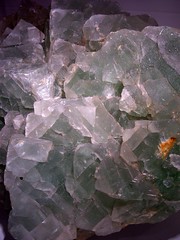
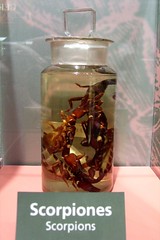
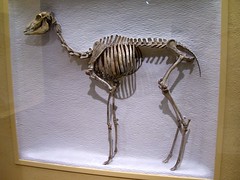
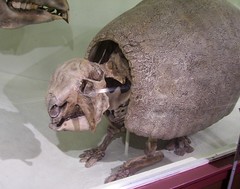
The Harvard Museum of Natural History is probably the largest "cabinet of curiosities" that I have been to. Entrance is free on Sunday mornings, and if you are in the Boston area, it is well worth your time, especially if you have children.

crystal structures Scorpiones

Stenomylus

Glyptodont

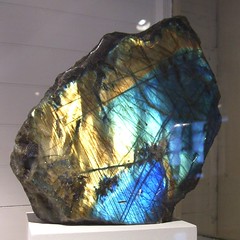
morpho butterflies Labradorite


Previous posts on the HMNH here and here

Labels: , , , , ,

Friday, January 11, 2008

If It Hasn't Got A Tail It's Not A Monkey*


Two interesting essays on the conundrum that is Evolutionary Theory.

First, from Lee Harris at TCS Daily, Why We Are Still Arguing About Darwin

And from New Wineskins, The Myth of Time + Chance = Mankind


Both pose interesting observations about the Theory of Evolution. Excellent quotes, "Thou shalt not act like a monkey—this is the essence of all the higher religions, and the summation of all ethical systems." from the first essay.

And What’s glossed over in that budding scientific understanding of complex and self-organizing systems, fractals, chaos theory and the like is whether all types of ordered complexity can be created this way. from the second.


Personally, the issue is a non-starter for me. If you really believe in a Sovereign God, then that God is sovereign over all things, and questioning his methods is an exercise in hubris. You weren't there, so claiming one method over another as correct is silly. I am not smart enough to tell God what to do, especially in retrospect.

Besides, if you really are tied to a literal reading of the first two chapters of Genesis, then the "lights in the expanse of the sky to separate the day from the night,... [that] serve as signs to mark seasons and days and years..." were made on the fourth day. If the Sun was not made till the fourth day, then a literal reading of Genesis precludes the creation happening in seven 24 hour periods, because there was no 24 hour day before the "fourth day".

To stake all faith on the ability to precisely understand one small passage is counter-productive. If you perfectly understood everything, you wouldn't need faith.


* with apologies to VeggieTales (click the middle title, "Monkey")

Labels: , , , , ,

Thursday, January 03, 2008

New Books for a New Year

Recent acquisitions, some for reading, some just a artistic reference;

From Dover Books

Philosophy and Civilization in the Middle Ages by Maurice DeWulf

Form and Design in Classic Architecture by Arthur Stratton

A Manual of Historic Ornament by Richard Glazier

Masterpieces of Medieval Open Timber Roofs by Raphael Brandon & J. Arthur Brandon

Great Bridges: From Ancient Times to the Twentieth Century by Wilbur J. Watson

Book of Old-Time Trades and Tools Anonymous

And the following condensed from the writings of Leonardo da Vinci

A Treatise on Painting

Leonardo on Art and the Artist

Leonardo on the Human Body

and The Notebooks of Leonardo da Vinci, Vol. 1 and Vol. 2

For those of you interested in da Vinci, Dover has a wide selection of books and CD Rom image collections that include his work.

This probably means that I will re-read Kenneth Clark's excellent biography Leonardo da Vinci, which was one of last year's books.

There are a number of books that were purchased or given to me last year that I need to read or finish;

Edward Hopper (Exhibition Catalogue) which includes excellent biographical information and several essays.

The Ten Books on Architecture by Vitruvius. I have been reading through this, and it was fairly easy going, up until the section on acoustics....

Joseph Cornell: Shadowplay . . . Eterniday from the show last summer at The Peabody Essex Museum

I'm planning to post some thoughts on the Hopper and Cornell books later on.

Labels: , , , , , , , , ,

Saturday, December 15, 2007

Best Public Service Announcement You'll See Today

Kim du Toit posts today's must read.

And there is nothing I can add to that, except maybe, say "Thank you."

Labels: , , , , , ,

Saturday, October 27, 2007

Amazing!

PK, over at BibliOdyssey, is having a book published based on the excellent, and very eclectic art history blog he has run for the last two years.

(gotta get me a copy....)

Labels: , , , , , ,

Sunday, April 22, 2007

The Inimitable LaShawn Barber asks how many books do you own?

Now there is a topic that I could run on with for days. Truth be told, if I could do anything I wanted I would be happiest curling up with a book, morning, noon and night.

I usually have several books running at a time. Currently it's Vitruvius "The Ten Books on Architecture" and Emile Male "Religious Art in France of the Thirteenth Century", and there are always a dozen or so books on my 'next-to-read' shelf. Photo resource books on cathedral architecture are always at hand as research for my paintings. I'm also currently re-reading (for the ump-teenth time) my college textbook on Italian Renaissance Art.

Other than living a righteous life, there are only two things that a man can do to be like God. The first is to be truly creative. The second is to always seek wisdom and knowledge. God is the beginning and end of creativity, and he has all wisdom and knowledge.

Any man who wants to do good in this life could find no better place to start than to seek after knowledge and wisdom.

Proverbs 4:6-7 Do not forsake wisdom, and she will protect you; love her, and she will watch over you. Wisdom is supreme; therefore get wisdom. Though it cost all you have, [a] get understanding.

Proverbs 19:8 He who gets wisdom loves his own soul; he who cherishes understanding prospers.

Proverbs 23:23 Buy the truth and do not sell it; get wisdom, discipline and understanding.

(all NIV)

Labels: , , ,

Tuesday, February 28, 2006

Polymath; the term used in polite society for an adult with ADHD

I wonder if anyone has studied or theorized on the evolutionary cost and benefits trade-offs of depression and ADHD. Depression is tricky, I can't really think of anything it is good for, but it may come hand-in-hand with something beneficial. ADHD and ADD on the other hand, strike me as having distinct possibilities. Being able to concentrate on boring or repetitive tasks, like chipping flint to make spear-points for a whole day, but being able to suddenly flip into hyper-vigilance at the hint of danger would be a distinct survival tactic.

I am just a layman, and my understanding of these processes is only light. Anyone have any thoughts?

Labels: , ,

Friday, January 20, 2006

Today, the family went to the Museum of Fine Arts in Boston.

We have a family membership, and my wife takes the kids in each week for an arts and crafts class. I should know better than to tag along, as inevitably the first thing I do is browse through their excellent bookstore.

An expensive mistake...

Now on the shelf,

A Masterpiece Reconstructed, the Hours of Louis XII Thomas Kren & Mark Evans eds. ISBN 0-89236-829-2; The J. Paul Getty Museum and The British Library, in association with the Victoria and Albery Museum

Gothic Sculpture, 1140-1300 Paul Williamson, ISBN0-300-07452-2; Yale University Press, Pelican History of Art

the Gothic Enterprise, a Guide to Undestanding the Medieval Cathedral Robert A. Scott, ISBN 0-520-24680-2; University of California Press

I also picked up "Medieval Objects in the Museum of Fine Arts, Boston, Metalwork" from the discount bin, and the 2006 Artist's & Graphic Designer's Market (ISBN 1-58297-396-2; Writers Digest Books).


I had previously gotten Gothic Architecture by Paul Frankl, from Yale University Press, Pelican History of Art, and was very pleased with it. Clear, concise, plenty of quality illustrations (though mostly small and black and white) and excellent research for my painitngs.

As soon as I'm done with one, I'll attempt my first book review for the weblog. It will probably be 'the Hours of Louis XII' as I already started reading it in the car while waiting for the family to get out of their class. The reproductions are excellent and the scholarship (being a companion book to an exhibit) looks to be of matching quality or better.

Labels: , , , , ,