Friday, August 15, 2008

This Is Why You Should Curb Your Dog

Labels: , , , ,

Thursday, May 29, 2008

Roman Funerary Art at the Museum of Fine Art, Boston

FUNERARY PORTRAIT RELIEFS

During the late Republican and Augustan periods (about 70 B.C.-A.D. 14), funerary reliefs with portraits of the deceased and members of their families were popular. Almost without exception the portraits are of freed slaves (liberti) and their offspring. The portraits are frequently accompanied by inscriptions that indicate the professions and family relationships of the people in the relief. Occasionally, a slave's former owner was also shown. The reliefs were inserted into the tombs that lined the roads leading out of Rome. This use of funerary portrait reliefs saw a resurgence in the second century A.D.

(from the display card for Funerary Relief of the Publius Gessius Family)

The MFA has many wonderful Roman antiquities. Here are some of the Funerary Portraits, Cinerary Urns, and Sarcophagi that they display.

long post, with complete transcribed display information, just keep scrolling


Funerary Relief of a Mother and Son
Roman, Imperial period, about A.D. 110-120
Marble

This panel came from a tomb that, as the inscription records, Petronia Hedone made for herself and her son as well as her fredd slaves and their descendants. The resemblance of Petronia's hair to that of Martiana (died A.D. 112), Emperor Trajan's sister, suggests the relief's date, though the use of drilled holes for the pupils of the eyes rarely occurs before the reign of Hadrian (A.D. 117-138).

Henry Lillie Pierce Fund, 1899 99.348

Inscription
Petronia Hedone fecit sibi/et L(ucio) Petronio Philemoni filio/et libertis libertabusquae/posterisquae eorum

Petronia Hedone made [this] for herself and for Lucius Petronius Philemon, her son, and for [her] freedmen and freedwomen and their descendants


Sarcophagus with Triumph of Dionysus
Marble (from the island of Proconnesus, Turkey)

Dionysus, also known as Bacchus, was the god of wine and drama. He is one of the most frequently depicted gods in ancient art and is often shown in the company of mythological beings like satyrs, silens, and maenads as well as such animals as lions, panthers, and snakes. The inclusion of an elephant-drawn chariot and a giraffe in the procession identify the scene as the god's triumphal return from spreading his cult to India. Dionysiac imagery frequently occurs in Roman funerary art, and may reflect the beliefs of the deceased.

William Francis Warden Fund, 1972 1972.650


Funerary Relief of the Publius Gessius Family
Roman, late Republican period, about 50-20 B.C.
Marble (probably from Carrara, Italy)

The Latin inscription at the base identifies the central figure as Publius Gessius, a Roman citizen in military costume. He is flanked by Fausta Gessia, a slave whom he had freed, and by their son, R. Gessius Primus, also a freed slave. The inscriptions on the sides indicate that Fausta built the tomb that held this relief with money provided in Primus's will, a common practice in antiquity.

Archibald Cary Coolidge Fund, 1937 37.100

Inscriptions
Lower Edge:
Gessia P(ubli) l(iberta) Fausta/P(ublius) Gessius P(ubli) f(ilius) (tribu) Rom(ilia)/P(ublius) Gessius P(ubli) l(ibertus) Primus

Gessia Fausta, freedwoman of Publius/Publius Gessius, son of Publius, of the Romilian tribe/Publius gessius Primus, freedman of Publius

Left:
ex testam[ento]/P(ubli) Gessi P(ubli) l(iberti)/Primi

From the testament of Publius Gessius Primus, freedman of Publius

Right:
Arbi(tratu)/Gessia[e P(ubli) l(ibertae)]/Fausta[e]

Under the direction of Gessia Fausta, freedwoman of Publius


Cinerary Urn with Offering Scene
Roman, Imperial period, about A.D. 150
Marble (from the island of Proconnesus, Turkey)

In this scene of piety, a man pours an offering of wine over an altar while a woman raises her hands in prayer. A flute player provides music, a frequent component of ancient sacrifices. The side panels show the eagle of Jupiter and the peacock of Juno, each holding a victory wreath. Cinerary urns and sacrophagi were usually produced in workshops near quarries and shipped to urban centers of sale. The faces of this couple were prepared for portraits that were never carved, perhaps due to a sudden death and the need to use the urn immediately.

Museum purchase with funds donated in memory of Emily Townsend Vermeule, 2002 2002.25
(from the display card)


Cinerary Urn of L. Cassius Colonus Colonianus
Roman, late imperial period, about A.D. 200
Marble (from the Greek island of Thasos)

This urn held the ashes of Lucius Cassius Colonus Colonianus, a member of the social class known as the equites (roughly "knights"). The urn is densely covered with figures representing the death of Pentheus, king of Thebes, a story known from Euripides's play 'The Bacchae'. Pentheus opposed the presence of Dionysus in his city and spied upon the women celebrating the god's rites. This scene shows the play's climax, when the women of Thebes, driven into the ecstatic state associated with the worship of Dionysus, tear Pentheus apart. Dionysus, standing on the left, witnesses this scene, accompanied by his thiasos (entourage) of satyrs, silens, and maenads.

Benjamin and Lucy Rowland Fund, 1972 1972.356

Inscription
D(is) M(anibus) L(uci) Cassi Coloni Coloniani eq(uitis) R(omani)/vixit ann(is) XXXV
To the spirits of the dead of Lucius Cassius Colonus Colonianus, a Roman eques; he lived thirty-five years.

Labels: , , , , , , , , ,

Thursday, May 08, 2008

El Greco to Velázquez Art During the Reign of Philip III

at the Museum of Fine Arts, Boston through July 27, 2008

For any of you who are in striking distance of Boston, I highly recommend this exhibit. It is absolutely wonderful, has several paintings that I am familiar with from years of reading art history, but also many pieces I had never seen in print or otherwise. Much of the work by the two 'headliners,' El Greco and Velázquez, were real revelations in person. Even with modern high-quality reproduction, there is nothing like seeing the original, up close.

For this post, however, I'd like to focus on some of the still life paintings. These didn't seem to get the same attention from the viewers as the bigger and showier religious paintings. Yet these pieces are exquisite, and well worth the time and ticket to see just in themselves.

A few examples:


Felipe Ramírez Still Life with Cardoon, Francolin, Grapes and Irises, 1628
Oil on canvas, 28 X 36 3/16 in. (71 X 92 cm)
Museo Nacional del Prado, Madrid


Juan Sáchez Cotán Still Life with Fruit and Vegetables, about 1602
Oil on canvas 27 3/8 X 38 in. (69.5 X 96.5 cm)
Varez Fisa Collection, Spain


Juan Sáchez Cotán Still Life with Quince, Cabbage, Melon and Cucumber, about 1600
Oil on canvas 27 1/4 X 33 1/2 in. (69.2 X 85.1 cm)
San Diego Museum of Art


Juan Sáchez Cotán Still Life with Game Fowl, about 1600
Oil on canvas 26 11/16 X 34 15/16 in. (67.8 X 88.7 cm)
The Art Institute of Chicago


These pieces and about a dozen other still lifes and domestic paintings by other artists including Alejandro De Loarte, Juan Van Der Hamen Y León, and Velázquez could have held my attention for hours.

Add to that the many portraits, the religions works and mythological works, the previously mention opportunity to see all of these up close, and the exhibit provides an incredible view of art in Spain at the end of the 16th Century on into the 17th.

The show also includes several amazing wooden polychrome sculptures of Saints on loan from Spanish churches, and has a reconstruction of a "treasure room" of glassware, pottery, silver and objects of curiosity (sort of a "Cabinet of Curiosities" of the craftwork of men) originally set up by the Spanish Royalty to impress their visitors.

Again, I can not say enough how highly I recommend seeing this exhibition.


Images from El Greco to Velázquez, Art During the Reign of Philip III by Sarah Schroth and Ronni Baer, with essays by Ronni Baer, Laura R. Bass, Antonio Feros, Rosemarie Mulcahy, and Sarah Schroth MFA Publications, Museum of Fine Arts, Boston, Published in association with the Nasher Museum of Art at Duke University. © 2008 ISBN 978-0-87846-726-6 (hardcover) $65.00 (Museum Members get a discount).

I also highly recommend the book, which contains much useful information, and a catalogue of the show, for a total of 162 high quality color illustrations

Labels: , , , , , , , , ,

Thursday, April 03, 2008

Bobby Does Not Read


I had previously blogged about the work of Len Cowgill. He is a wonderful artist, and a very generous man.

I am very grateful to be able to say that his work is far more amazing in person than in photos.


Hmmmm.... I guess this makes me a collector as well as an artist.

Labels: , , , , ,

Wednesday, February 13, 2008

Assemblage Cabinets, Joseph Cornell and Len Cowgill


Over the summer, I went to an amazing exhibit at the Peabody Essex Museum in Salem Massachusetts. It was a beautifully set up and presented retrospective of the life and work of artist Joseph Cornell.


Untitled (Penny Arcade Portrait of Lauren Bacall) 1945-46


Assemblage art can look deceptive simple to a non-artist. It is amazingly easy to do poorly. Anyone can (and often have) thrown a bunch of found junk together and labeled it art.

To produce something truly evocative by assemblage is quite difficult. To be able to create a whole body of work, of quality and of lasting interest and impact is frankly a terrifying and daunting task. I have always loved and been fascinated by assemblage. It is a technique and concept central to many styles of Theatre Design, which is the discipline in which I originally trained. Assemblage is not an area I would try to build a body of work out of, for frankly, I don't have what it takes for that.

Joseph Cornell (December 24, 1903 – December 29, 1972) is the dean of assemblage artists. His amazing work draws you in, and makes you yearn to touch, to explore, to be a part of the tiny universes he created.


Untitled (Soap Bubble Set) 1936


Untitled (Medici Prince) 1952


Untitled (Aviary With Watch Faces) 1949


My favorite pieces of Cornell's work are from the "Soap Bubble Set" and the "Medici Slot Machines", though all of his work is fascinating. Boxes and cabinets filled with small drawers or bottles. The contents of the clear bottles are there to see, and mark you itch to remove them and investigate them at leisure. The drawers, which were often closed in the exhibit, are opaque and mysterious, making you wonder what is inside.

If you ever have a chance to see his work, I would highly recommend it. As an alternative there is the excellent book Shadowplay Eterniday with essays and commentary by Lynda Roscoe Hartigan, Richard Vine, Robert Lehrman, and Walter Hopps. Though the writing is rather wordy, it is enjoyable and is beautifully put together, with many gorgeous full color plates, and a DVD Rom giving insight into Cornell's work and life.


A current artist who is keeping the art of assemblage not only alive, but vibrant, is Len Cowgill. He has an excellent Flickr site showcasing his work. His work shows all the best and great potential that assemblage has. Small closed objects that demand opening.


THAT DAMNED VOICE INSIDE MY HEAD


Works large and small that present their own contained universes worthy of lengthy examination, with enough substance to reward long contemplation.


Myths of Childhood (open)


I strongly urge you to go poke around in his site, his work is wonderful!

top illustration, "Joseph Cornell" by Len Cowgill, from his work in progress.

UPDATE: I was remiss in not noting that Len Cowgill's artwork is available through the Tamarack Gallery


THAT DAMNED VOICE INSIDE MY HEAD, Myths of Childhood, and portrait of Joseph Cornell are all copyright by Len Cowgill, all rights reserved to the artist, and used here by permission.

Labels: , , , , , ,

Thursday, July 27, 2006

MY EYES, MY EYES!


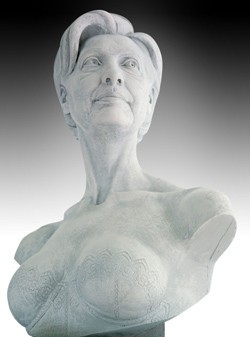
Now I certainly don't agree with the Senator from New York's politics, but this thing is just an insult to her!

What, Pat Buchanan has taken up sculpture? Is this some kind of bad joke? What was the artist thinking? How much of the brown acid was he/she taking?

And furthermore, there is one thing of which I am completely certain concerning Sen. Hillary. She doesn't need a comb-over!

H/T the Anchoress (from whom I purloined the image)

Labels: , , , , , ,

Sunday, June 11, 2006

Another Scanning Project

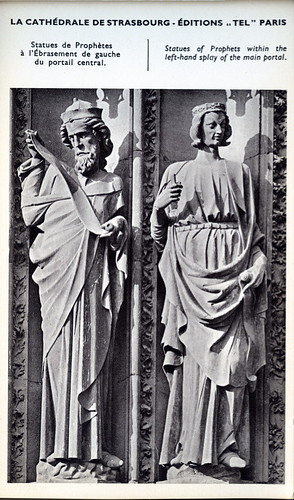
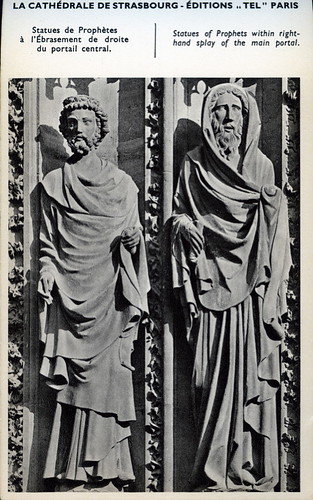
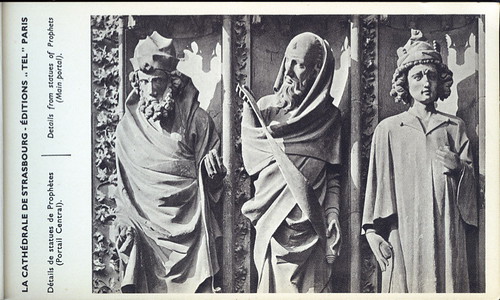
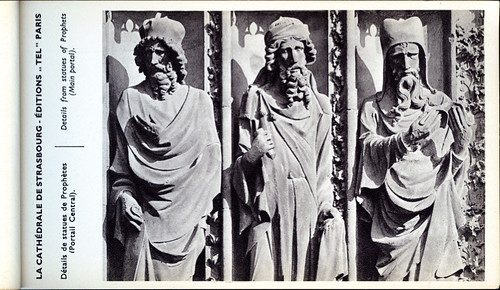
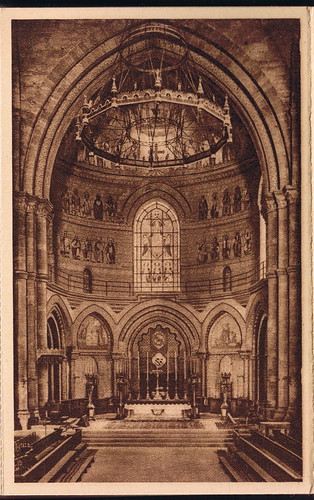
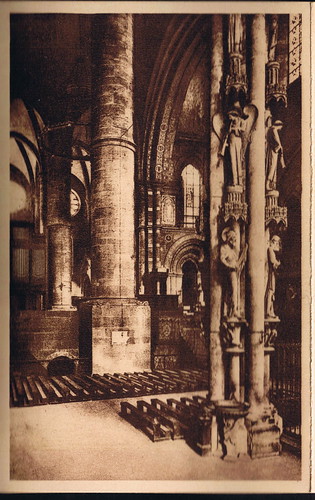
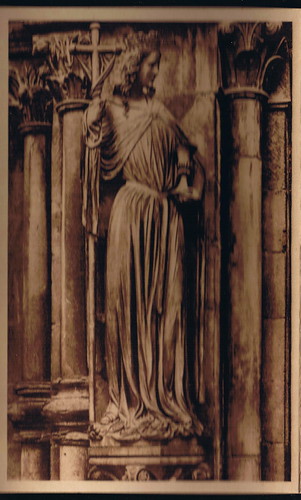
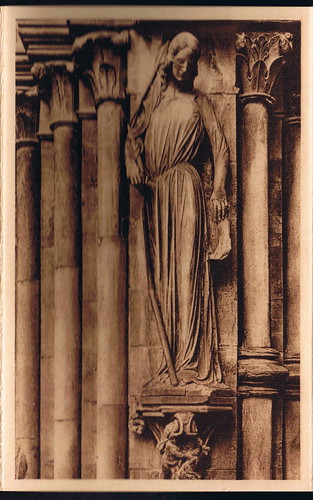
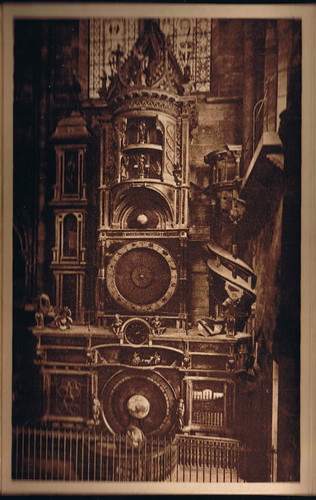
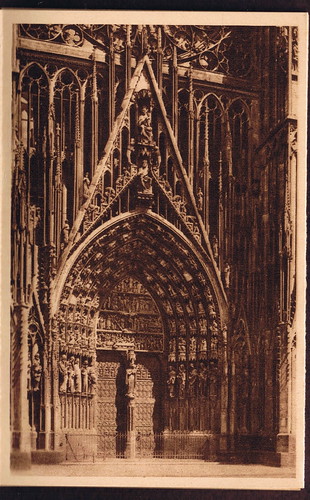
Another vintage photo resource I have recently aquired is a small (4X7 inches) photo-book La Cathedrale de Strasbourg, Editions "Tel". It looks to have been printed somewhere between the 'teens and the 'thirties. The book contains shots of some of the portal figures of prophets and virtues that I have never seen photos of anywhere before.


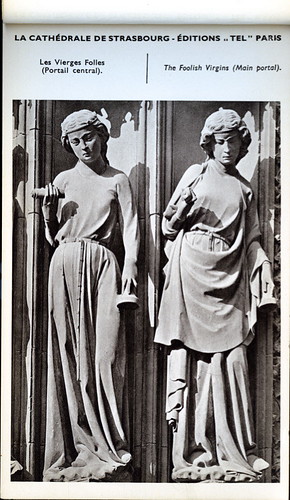
There are also some excellent shots of the Wise and Foolish Virgins, which I have seen some photos of elsewhere.


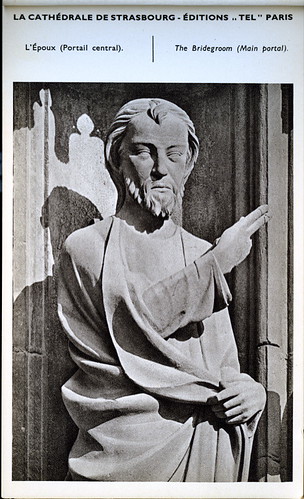
One image related to the Virgins which I had never seen (which is odd, considering it's central part in the parable) is the Bridegroom.


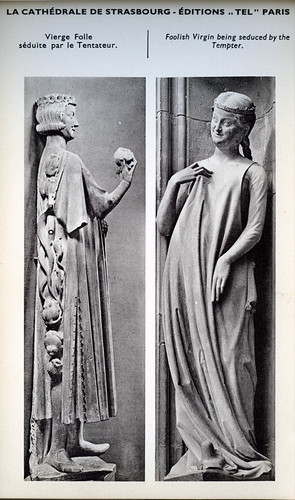
And though I had seen shots of these statues,


I don't think I had ever seen the left hand (male) figure described as 'the Tempter.'

Labels: , , , , ,

Thursday, March 09, 2006

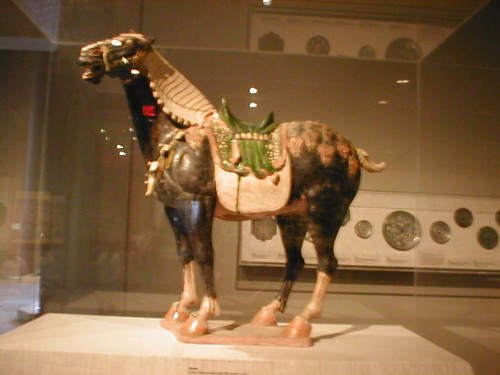
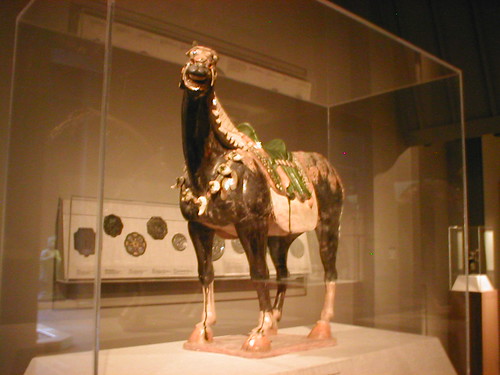
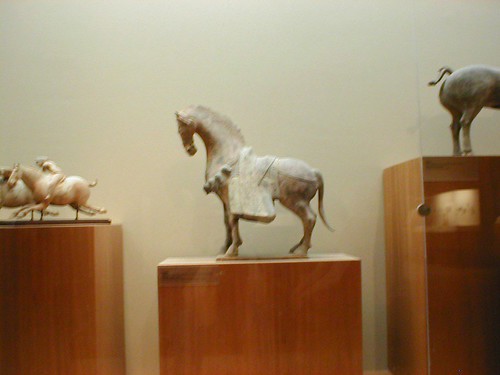
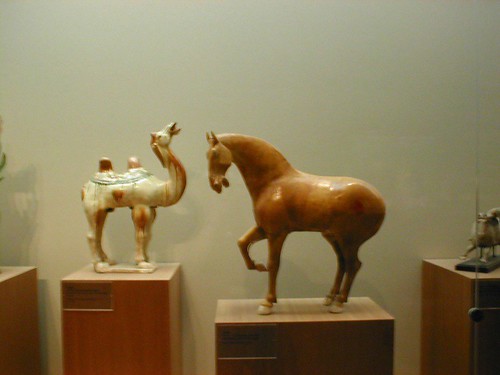
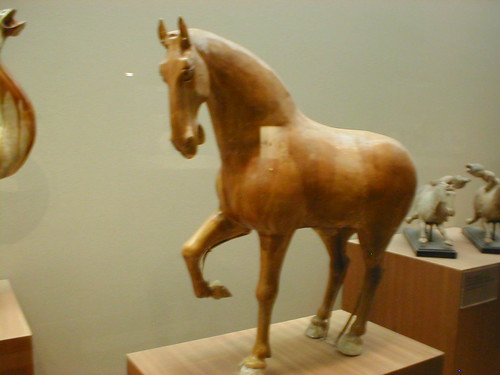
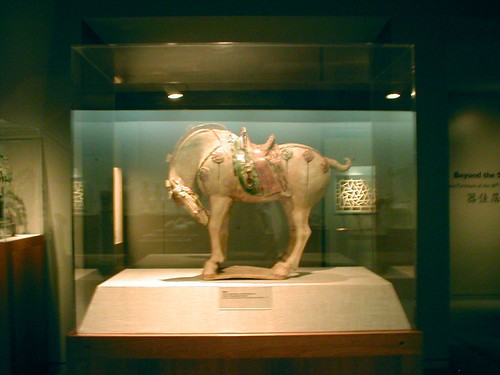
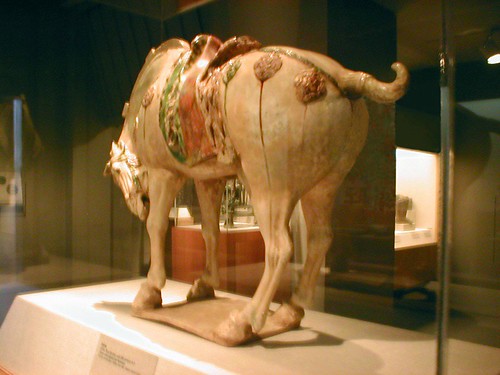
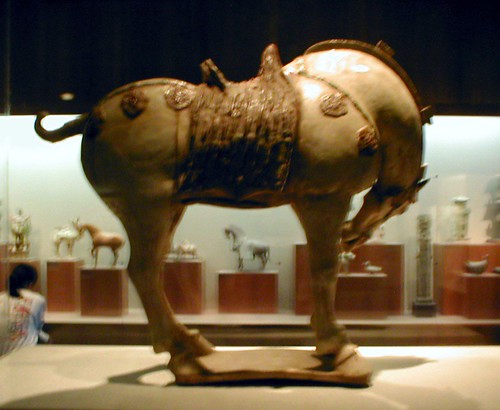
Ceramic Chinese horses at the MFA


These have are my favorite objects at the Museum of Fine Arts, Boston. The glazes are beautiful and subtle. The forms are graceful, at rest and yet dynamic. There is no way to capture them properly in an image (even if the quality were much better than these shots). If you are in Boston, it is well worth your time to go see the museum, even if it's just to gaze at these for a while.

Labels: , , ,

Saturday, February 18, 2006

Vintage Postcards

Cathedrale de Strasbourg


Le Choeur

Colonne des Anges

Ecclesia

La Synagogue

Horloge astronomique de la Cathedrale

Le Grand Portail

Labels: , , ,

Friday, January 27, 2006

A roundup of interesting art sites found while browsing

EscapeRail, Fire escapes as the subject of art photos

Kenji Yanobe: Survival System Train and Other Sculpture, the unkempt aftermath of "Better Living Through Science."

Klockwerks, Unique Timepieces designed by Roger Wood
I especially like this one


I'l try to do something like this on a regular basis.

UPDATE: One of my favorite sites, BibliOdyssey has posted illustrations from 1723 of "People of the World." If you are interested in history or costume design, take a look.

Labels: , ,